Agent Queue
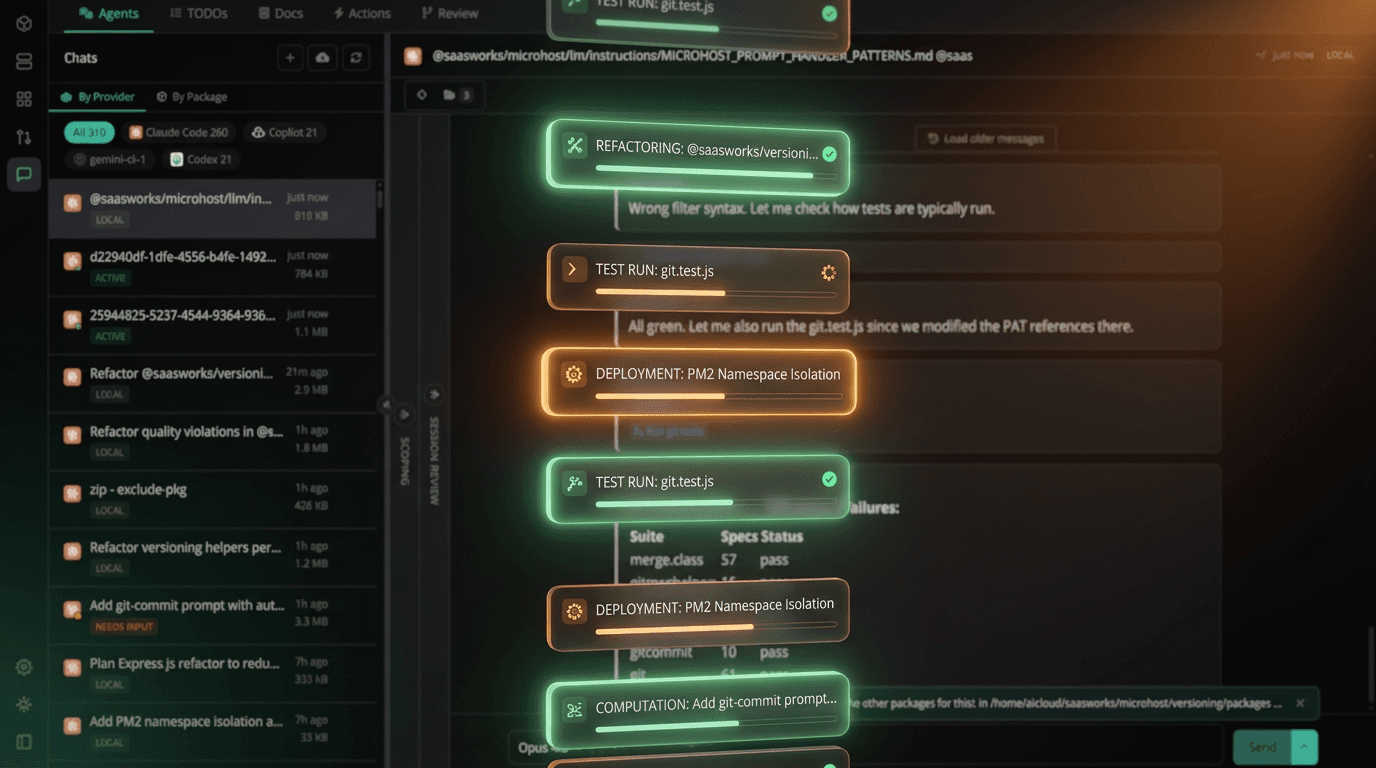
A persistent job runner for the work you'd rather not babysit.
Most agent workflows are interactive: you sit there, you watch the tokens stream, you approve each step. That works for exploratory tasks. It does not work for the kind of work agents are actually good at — overnight refactors, test suite expansions, batch documentation runs, regression sweeps.
The Agent Queue is the execution layer for non-interactive work. Submit a plan from the Planning Engine, or queue tasks directly, and the runner executes them in the background. It handles retries on transient failures, batches similar operations to reduce overhead, and schedules around your rate limits so you don't get throttled mid-job.
Every task runs in an isolated workspace tied to your local runtime. The queue mounts the relevant repo, runs the work, commits results to a branch (or a scratch directory, your choice), and reports back. You see what was done, what failed, what was skipped, and you can roll back any individual task without unwinding the whole batch.
The queue runs 24/7 if you let it. Kick off a job before bed, wake up to a finished refactor with passing tests. Or run it as a one-shot — submit, wait, review, done. The runtime doesn't care.
Cost control is built in. You set per-job and per-day token budgets. The queue stops before it exceeds them, regardless of how much work remains, and reports what's left so you can decide whether to extend. No surprise bills.
The Agent Queue is what the local runtime exists for. Without it, you have a chat interface with extra steps. With it, you have actual infrastructure.