Planning Engine
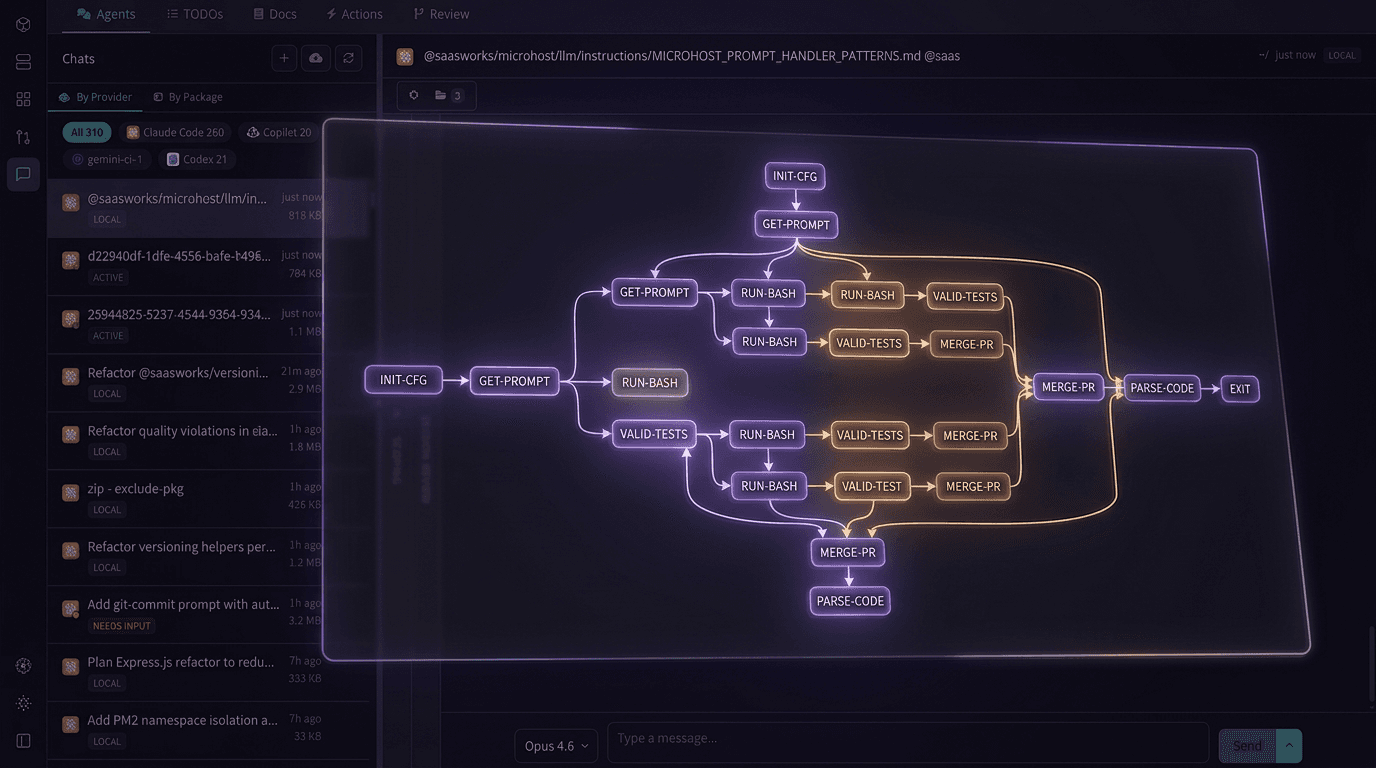
Prompts become plans. Plans become task graphs. Task graphs run themselves.
The gap between "I want to refactor the auth layer" and "here are the 14 edits, in order, with rollback points" is where most AI coding tools fall apart. They either generate one massive diff you can't review, or they ask you to break the work down yourself — which defeats the purpose.
The Planning Engine sits between user intent and execution. You describe what you want in plain language. The engine queries the RAG Index for relevant context, reads the instruction files for the affected packages, and produces a structured execution plan: an ordered task graph with explicit dependencies, file-level scope, and expected outcomes for each step.
You review the plan, not the code. Approve it, reject it, edit individual tasks, reorder steps. Nothing executes until you commit. When you do commit, the plan hands off to the Agent Queue, which runs the tasks in dependency order with retries and rollback.
Plans are persistent. Pause work mid-execution, come back tomorrow, the plan resumes from the last completed task. Plans are also editable mid-flight — if task 7 reveals something task 12 needs to account for, you can amend the graph without restarting.
This is the orchestration layer that separates "AI chat that writes code" from "an agent system that ships features." The planning step is also where cost becomes predictable: the engine estimates token usage per task before execution, so you know what a refactor will cost before you start it, not after.
Underneath, plans use a deterministic task representation — JSON, versionable, diff-able, exportable. If you want to inspect what the model actually decided to do, you can read it.